
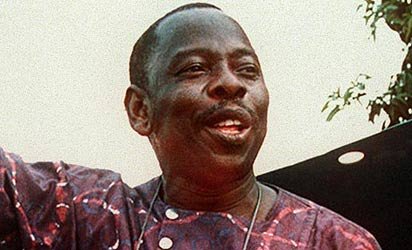
The story of Kenule Beeson “Ken” Saro-Wiwa (1941–1995) is a tale of a gifted Nigerian man who traded a life of comfort and celebrity for a perilous fight to save his homeland from environmental destruction, a struggle that cost him his life but galvanized a global movement for justice.
Saro-Wiwa was, by the 1980s, an accomplished and well-known figure.
He was a successful writer, famous for his satirical novel Sozaboy: A Novel in Rotten English, and a beloved television producer, whose show “Basi & Company” became reportedly the most popular series in Africa in its day.
Yet, his prosperity stood in stark contrast to the fate of his native land, Ogoniland, home to the minority Ogoni people in the Niger Delta.
Since the 1950s, Royal Dutch Shell and other oil companies had been extracting oil from the region, leaving behind a ruined landscape.
For the Ogoni, who were primarily farmers and fishermen, their land had become a zone of “extreme environmental damage”—fertile farmland was turned into contaminated fields, and the waters were poisoned by decades of indiscriminate petroleum waste dumping and unchecked oil spills.
In 1990, Saro-Wiwa chose to dedicate himself to this cause, co-founding the Movement for the Survival of the Ogoni People (MOSOP).
He led a courageous nonviolent campaign against this degradation and the Nigerian government’s political marginalization.
The heart of the movement was the “Ogoni Bill of Rights,” which called for, among other things, “political control of Ogoni affairs by Ogoni people,” control over their economic resources, and the “Right to protect Ogoni environment and ecology from further degradation.”
The campaign brought the Ogoni struggle to the world stage.
In January 1993, Saro-Wiwa mobilized a peaceful march of an estimated 300,000 Ogoni, demanding a share in the oil revenues and environmental justice.
For his “exemplary courage in striving non-violently for civil, economic and environmental rights,” he won the prestigious Goldman Environmental Prize and the Right Livelihood Award.
His prominence, however, made him a target of the military dictatorship of General Sani Abacha, which viewed MOSOP’s actions as a threat to its oil-dependent power.
In May 1994, Saro-Wiwa was arrested and jailed after four pro-government Ogoni chiefs were murdered.
Despite his long-standing commitment to non-violence, Saro-Wiwa and eight co-defendants—the “Ogoni Nine”—were accused of instigating the crime.
Held for months without formal charge and allegedly subjected to torture, Saro-Wiwa was eventually brought before a “Special Military Tribunal” in a proceeding that was widely regarded as a “sham” and a “fraudulent trial” by international observers.
During his imprisonment, he wrote, “I am like Ogoni, battered, bruised, brutalized, bloodied and almost buried.”
In a final speech that he was prevented from reading, he stated, “I am a man of peace, of ideas, appalled by the denigrating poverty of my people who live on a richly endowed land.”
He warned the court, “My Lord, we all stand before history.”
On November 10, 1995, in defiance of frantic pleas for clemency from world leaders, the military regime executed Ken Saro-Wiwa and his eight colleagues.
His last known utterance, “Lord take my soul, but the struggle continues,” became a powerful testament to his unwavering conviction and an inspiration for activists around the globe.
His execution was denounced as “judicial murder” by global leaders, and the subsequent international sanctions and scrutiny fundamentally changed the conversation about corporate and government accountability in the Niger Delta.


